In pharmaceutical and nutraceutical manufacturing, capsule production technology plays a crucial role in determining efficiency, product quality, and operational cost. As production demands increase, manufacturers often face an important decision: whether to invest in fully automated systems or opt for semi-automatic solutions.
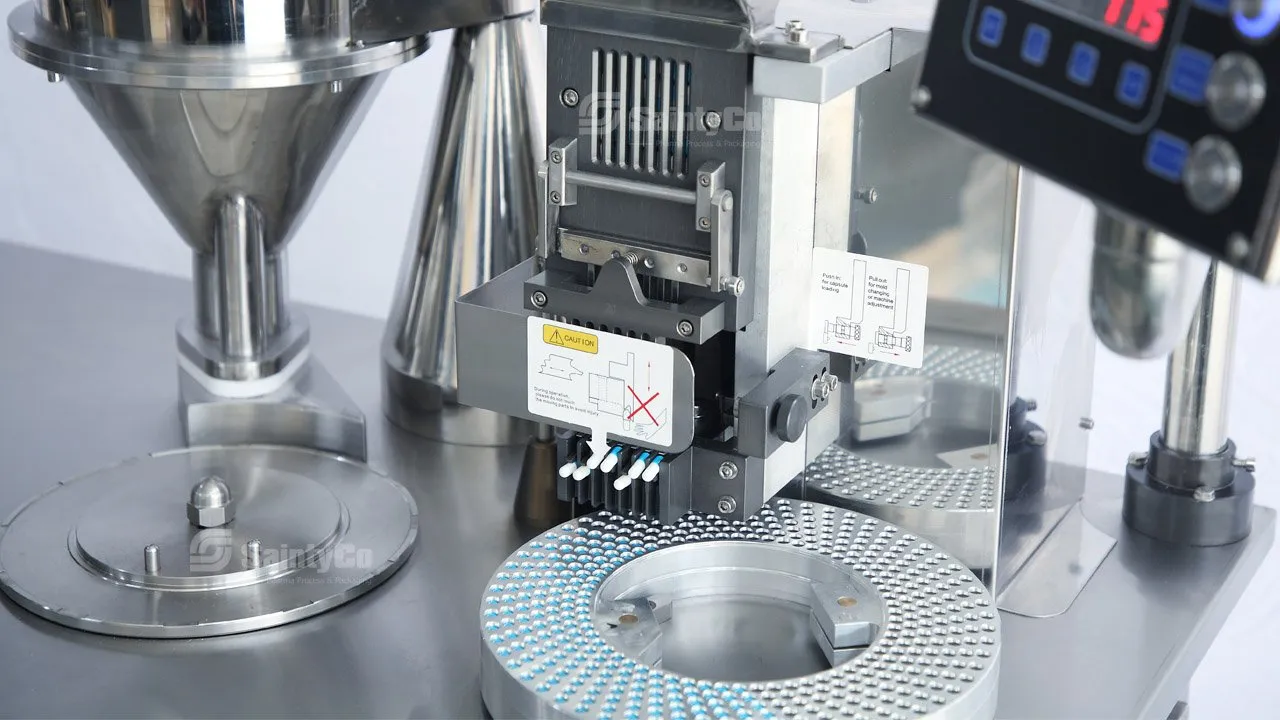
An automatic capsule filling machine represents a fully integrated production system designed for high-speed, continuous operation with minimal human involvement. In contrast, semi-automatic models rely more on operator participation while still offering mechanical assistance for key processes. Understanding the differences between these two systems is essential for making the right investment decision.
Table of Contents
ToggleOverview of Both Capsule Filling Systems
Both machine types are designed to fill empty capsules with powders, granules, or pellets, but they differ significantly in terms of automation level and production capacity.
A modern automatic capsule filling machine is built for large-scale manufacturing where speed, consistency, and minimal labor involvement are priorities. Semi-automatic systems, on the other hand, are better suited for medium-scale production where flexibility and cost control are more important.
Production Speed and Output Comparison
One of the most noticeable differences between the two systems is production speed.
Automatic Machines:
- High-speed continuous production
- Minimal downtime between cycles
- Suitable for mass production requirements
Semi-Automatic Machines:
- Moderate production speed
- Batch-based operation
- Dependent on operator handling efficiency
Automatic systems clearly outperform semi-automatic models when it comes to large-volume output.
Level of Automation and Labor Requirement
Automation level directly affects labor dependency and operational efficiency.
Automatic Systems:
- Fully automated capsule feeding, filling, and sealing
- Minimal operator intervention required
- Reduced workforce dependency
Semi-Automatic Systems:
- Operator involvement required for loading and monitoring
- Manual assistance in certain production stages
- Higher labor requirement compared to automatic systems
This makes automation a key factor in long-term operational planning.
Accuracy and Consistency in Production
Consistency in dosage and capsule quality is critical in pharmaceutical manufacturing.
Automatic Machines:
- Highly precise dosing systems
- Reduced human error
- Uniform capsule weight across batches
Semi-Automatic Machines:
- Good accuracy but slightly dependent on operator control
- Minor variations possible in long production runs
- Requires regular monitoring for consistency
Automatic systems generally offer superior precision due to advanced control mechanisms.
Cost and Investment Considerations
Cost is often a deciding factor when choosing between the two systems.
Automatic Capsule Filling Machines:
- Higher initial investment
- Lower long-term labor costs
- Better suited for large-scale production facilities
Semi-Automatic Machines:
- Lower upfront cost
- Suitable for small to medium enterprises
- Higher operational dependency on labor
While semi-automatic systems are more budget-friendly initially, automatic systems often provide better long-term return on investment.
Flexibility and Production Versatility
Flexibility is important for manufacturers producing multiple formulations.
Semi-Automatic Systems:
- Easier to adjust for small batch production
- Suitable for R&D and product development
- Quick changeover between formulations
Automatic Systems:
- Designed for stable, large-scale production
- Less flexible for frequent product changes
- Better suited for standardized manufacturing
This makes semi-automatic machines more adaptable in smaller or experimental setups.
Maintenance and Operational Stability
Maintenance requirements also differ between the two systems.
Automatic Machines:
- Require scheduled professional maintenance
- More complex systems but highly stable when maintained properly
- Advanced diagnostics reduce unexpected downtime
Semi-Automatic Machines:
- Easier to maintain and repair
- Simpler mechanical structure
- Lower maintenance costs but more operator dependency
Which Machine is Right for Your Business?
Choosing between the two depends on production goals, budget, and long-term strategy.
Automatic systems are ideal for:
- Large pharmaceutical companies
- High-volume production facilities
- Continuous manufacturing requirements
Semi-automatic systems are better for:
- Small to medium manufacturers
- Startups and contract production units
- R&D and limited batch production
Conclusion
Both automatic and semi-automatic capsule filling machines offer distinct advantages depending on production needs. While automatic systems excel in speed, accuracy, and large-scale efficiency, semi-automatic models provide flexibility and lower initial investment.
By carefully evaluating production requirements, budget constraints, and long-term growth plans, manufacturers can choose the most suitable solution for their capsule production needs.